Roof basics
Attic Ventilation in Indiana: Moisture, Heat and Ice Dams
The air in your attic affects your roof, your insulation and your energy bills. Here is how ventilation works and what to check.
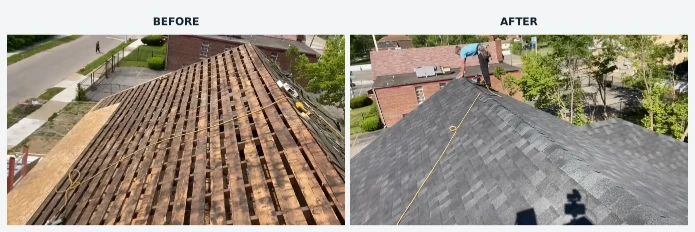
The short answer: If your roof has years left and the damage is in one area, repair it. If shingles are failing across the roof or the same leaks keep returning, a replacement saves money over time. We tell you which one applies, with photos.
Why attic ventilation matters
The Asphalt Roofing Manufacturers Association (ARMA) explains that a family of four releases roughly 2 to 4 gallons of water vapor a day through breathing, showering, cooking and other activities. Some of that moisture can reach the attic. In a cold attic it can condense on the roof deck and insulation.
According to ARMA, good ventilation helps with several problems:
- Moisture and mold. Damp insulation loses R-value over time and can encourage mold.
- Ice dams. In cold climates, condensation-related ice at the eaves raises the risk of leaks and gutter damage. See our guide to ice dams in Indiana.
- Heat buildup. Moving warm air out limits attic heat, which can reduce wear on shingles and the roof deck and lower the load on air conditioning.
Balanced intake and exhaust
ARMA considers a balanced system best, where intake ventilation at the eaves is matched by exhaust at or near the ridge. Soffit vents bring air in low, and ridge vents let it out at the top.
Two ratio rules are commonly cited by ARMA:
- 1:300 minimum: 1 square foot of net free ventilation area for every 300 square feet of attic space.
- 1:150 preferred: 1 square foot for every 150 square feet. ARMA states that FHA loans require meeting the 1:150 rule.
More exhaust is not always better. If ridge or gable vents are added without enough soffit intake, wind-driven rain or snow can be pulled into the attic.
Signs of a ventilation problem
ARMA describes the problems poor ventilation causes, rather than a checklist, but these are the signs homeowners usually notice:
- Ice dams or heavy icicles at the eaves in winter
- Damp, compressed or moldy insulation
- Frost or dark stains on the underside of the roof deck
- A very hot attic in summer
- Shingles that age faster than expected
Do not go onto the roof to check. If you can safely look into the attic with a flashlight, take photos and call a professional.
Insulation, air sealing and ventilation work together
Ventilation is only part of the picture. Warm air leaking from the living space into the attic through gaps around lights, hatches and wiring adds heat and moisture. Insulation and air sealing reduce that, and ventilation helps remove what remains. Our roof ventilation and ice dam page explains how the three fit together.
What to ask your roofer
- Is the attic’s intake and exhaust balanced?
- Are the soffit vents clear, or blocked by insulation?
- Will the new roof include ridge or other vents, and how were they sized?
- Will existing vents be replaced or reused?
These items should be listed in your estimate. See how to read a roofing estimate and our guide to moss and algae on shingles. If you see signs of trouble, contact us for an inspection.
Sources
Attic ventilation questions
How much attic ventilation do I need?
ARMA cites 1 square foot of net free ventilation per 300 square feet of attic as a minimum, and 1 per 150 as preferred. A roofer can size it for your home.
Can poor ventilation cause ice dams?
Yes. Heat and moisture in the attic can contribute to melting and refreezing at the eaves, which is how ice dams form.
Related:
Roof trouble in Indianapolis? Get a written estimate.
Serving homeowners across Marion County and the suburbs since 2019. No contracts, no pressure.
R&R Roofing
Roofing contractor serving Indianapolis, Indiana and the surrounding suburbs.
(317) 555-0142
123 Main Street, Indianapolis, IN 46204
License #RR-2019-4821, fully insured
© 2026 R&R Roofing. All rights reserved.