Roof basics
How to Choose Shingle Colors for an Indiana Home
Shingle color is partly about taste and partly about performance. Here is what color does, and what to check before you choose.
The short answer: If your roof has years left and the damage is in one area, repair it. If shingles are failing across the roof or the same leaks keep returning, a replacement saves money over time. We tell you which one applies, with photos.
Color affects more than looks
The U.S. Department of Energy says cool roofs reflect more sunlight and absorb less heat, and on a sunny summer afternoon a conventional roof can reach 150 degrees Fahrenheit or more, while a reflective roof can stay more than 50 degrees cooler. Lighter colors generally reflect more sunlight than dark ones.
But the DOE also notes that cool roofs carry a winter heating penalty. Because they absorb less sunlight, less heat reaches the building in winter. In colder regions, energy costs can rise if that winter penalty is larger than the summer savings. The DOE says hot climates benefit most from cool roofs.
Indiana has hot summers and cold winters, so there is no single best color for energy use. The result depends on your home, insulation and ventilation, and we will not promise a savings figure. See our guide to attic ventilation in Indiana.
Algae shows more on light roofs
The DOE notes that algae or mold shows more on light-colored roofs. The Asphalt Roofing Manufacturers Association says algae discoloration is more visible on lighter roofs and recommends algae-resistant shingles when reroofing. Read more in our guide to moss and algae on roof shingles.
Practical steps for choosing a color
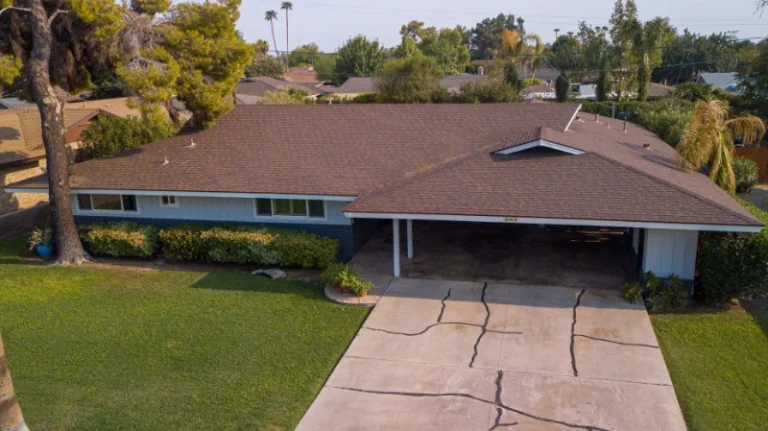
- Match the house. Consider your siding, brick, trim and window colors. Shingles are a long-term choice, so look at samples outdoors in daylight.
- Look at the neighborhood. Check what is common on your street, and whether your home is in an HOA or historic district that has rules. In Indianapolis, some historic districts review exterior changes, so check with your HOA or local preservation office before you decide.
- Think about algae and shade. If your lot is shaded and humid, ask about algae-resistant options.
- Ask about warranties and availability. Colors differ by manufacturer and product line. See our roof warranties explained.
- See a full-size sample. A small swatch looks different from a whole roof.
Shingle type matters too
Color is only one part of the choice. Material and style also affect cost and durability. See our pages on asphalt shingle roofing and metal roofing, and our guide on metal vs asphalt roofing in Indiana.
Ask your roofer
- Which product lines and colors are available?
- Can I see a full-size sample, or photos of a finished roof in that color?
- Is the color available in an algae-resistant version?
Include the exact product and color in your written estimate. See how to read a roofing estimate, or contact us for an estimate.
Sources
Shingle color questions
What is the best shingle color for Indiana?
There is no single best color. Lighter roofs reflect more heat in summer, but the DOE notes a winter heating penalty in colder regions. Choose based on your home, neighborhood and any HOA or historic rules.
Do dark shingles make a house hotter?
Dark roofs absorb more sunlight than light ones, which can raise attic temperatures in summer. Ventilation and insulation matter as much as color.
Related:
Roof trouble in Indianapolis? Get a written estimate.
Serving homeowners across Marion County and the suburbs since 2019. No contracts, no pressure.
R&R Roofing
Roofing contractor serving Indianapolis, Indiana and the surrounding suburbs.
(317) 555-0142
123 Main Street, Indianapolis, IN 46204
License #RR-2019-4821, fully insured
© 2026 R&R Roofing. All rights reserved.