Homeowner guide
Wind Damage to a Roof: Signs to Check After a Storm
Strong winds can damage a roof even when nothing obvious has blown off. Here is what to look for from the ground, what to leave to a professional and what to do next.
The short answer: Look for missing, creased or lifted shingles, debris on the roof or lawn and loose flashing, vents or ridge caps. Do not climb onto the roof yourself. Take photos from the ground, cover active leaks and ask for a roof inspection.
The short version
Wind damage often starts at the edges and ridges of a roof, where shingles face the most uplift. Some damage is easy to see. Other damage, such as a lifted shingle that has not yet torn, is easy to miss and can lead to leaks later.
Safety first: do not climb onto a wet or storm-damaged roof. Use binoculars or a phone zoom from the ground, and stay clear of downed power lines.
Signs you can check from the ground
- Shingles on the lawn, driveway or in gutters
- Bare patches where shingles have blown off
- Shingles that look lifted, curled or creased across the middle
- Ridge cap or hip shingles that are missing or hanging
- Loose or bent flashing, vent covers or metal edges
- Fallen branches or debris resting on the roof
- Granules or shingle fragments in downspouts
Photograph everything with the date visible. Photos from before the storm, if you have them, help show what changed.
Signs inside the house
- New water stains on ceilings or walls
- Drips or damp spots in the attic
- Daylight visible through the roof deck
- Mold or a musty smell in the attic
See our guide on how to find a roof leak if you see staining and are not sure where it starts.
What wind damage can look like up close
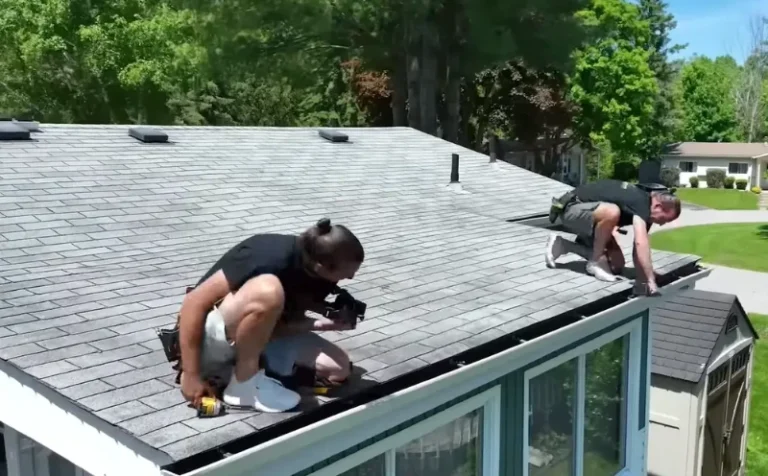
A professional inspecting your roof may find damage you cannot see from the ground. That includes creased shingles where wind folded the tab, broken seal strips, exposed nails and damaged flashing. Some of this will not leak today but can in the next heavy rain.
A thorough roof inspection documents the damage and the repair it needs.
What to do next
- Stay safe and take photos from the ground.
- Cover active leaks. A temporary roof tarp limits further damage.
- Read your homeowner’s policy and call your insurer to ask about the claim process and your wind and hail deductible.
- Get a written inspection. Our storm damage roof repair page explains the process.
- Compare written bids before signing, and be careful with anyone pushing you to sign immediately. See storm-chaser roofing scams.
Repair or replace after wind damage
A few missing shingles on an otherwise healthy roof can often be repaired. Widespread damage, an old roof or repeated storm damage may point to replacement. Our guide to repair vs replacement explains how roofers decide, and the insurance claim guide explains what your insurer will look at.
Wind damage questions
Can wind damage a roof without removing shingles?
Yes. Wind can lift and crease shingles or break their seal strips without blowing them off. The damage may only show up as leaks later.
How soon should I have a roof checked after a storm?
As soon as it is safe. Early documentation helps both repairs and any insurance claim.
Does homeowner’s insurance cover wind damage?
Many policies cover wind damage, subject to your deductible and policy terms. Read your policy and ask your insurer.
Should I go on the roof to check for damage?
No. A storm-damaged roof can be unsafe. Check from the ground and call a professional.
How do I know if a shingle is creased?
A creased shingle has a horizontal line or fold where the tab bent. It may look slightly raised. A close inspection is the best way to tell.
Related:
Roof trouble in Indianapolis? Get a written estimate.
Serving homeowners across Marion County and the suburbs since 2019. No contracts, no pressure.
R&R Roofing
Roofing contractor serving Indianapolis, Indiana and the surrounding suburbs.
(317) 555-0142
123 Main Street, Indianapolis, IN 46204
© 2026 R&R Roofing. All rights reserved.